Why Does My Neck Look Older Than My Face?

The short answer: Your neck can look older than your face because the skin there is thinner than facial skin — comparable to the skin on your eyelids — and can show signs of aging faster. It's also the step most routines skip. The good news: a simple, consistent routine can help neck skin look visibly firmer and smoother.
You cleanse, treat and moisturize your face every day. Then a photo, a video call or a glance in the mirror catches your neck at just the wrong angle — and it looks like it belongs to someone a few years older. If that sounds familiar, you're not imagining it. Here's what's really going on, what to look for and what you can do about it.
Is neck skin thinner than facial skin?
Yes. The skin on your neck is thinner than facial skin — According to a research article in the Journal of Clinical and Cosmetic Dermatology skin on the neck is about one-third less than on the cheek — and can show signs of aging faster.
That thinness is a big part of why neck skin can be quick to lose its bounce and look crepey. Think of a trampoline that's lost its spring.
Does the neck age faster than the face?
It can show signs of aging faster, and thinner skin is only half the story.
The other half is simple: most routines stop at the jawline. Americans spend about $41 a month on skincare, but often skip the neck or treat it as an afterthought. According to a survey conducted by Talker Research, less than one-third of women are using a skincare product on their neck on a daily basis.
So the neck gets far less attention than your face does, day after day.
What causes neck aging?
There's rarely one cause. A few common ones:
- Thinner skin that can be quick to lose its bounce
- A skipped step — the routine ends at the jawline
- Everyday sun exposure and repeated movement
- Screen habits — looking down at your phone or laptop can speed up the appearance of lines over time
The good news is that most of these are things you can work with.
Why is my neck aging so quickly?
Because it's running a different race than your face. Neck skin is thinner, so it can be quick to lose its bounce and show signs of aging faster. Meanwhile, your face gets daily serums and moisturizers that the neck often misses.
Add everyday sun exposure that builds up over time, especially when the neck goes unprotected, and the gap between face and neck can widen.
What are the first signs of aging on the neck?
Neck aging doesn't look the same for everyone. These are the signs people tend to notice first:
- Sagging skin
- Loss of firmness
- Crepey texture
- Uneven tone
- Fine lines and wrinkles
- Dullness
You might also notice horizontal lines or vertical bands.
Try a 30-second neck check. Stand in natural light with your chin level. Look straight on, then turn slightly to each side. Which sign do you notice first? Save this list and check again in a few months.
At what age does neck skin start to sag?
There's no single age. Genetics, sun exposure, lifestyle and skincare habits all play a part, which is why some people notice changes in one decade and others in another. Early signs of neck aging, such as lines and reduced firmness, can begin in the 30s, with more pronounced sagging happening in the 40s.
The practical takeaway: you don't have to wait for a visible sign to start caring for your neck. Starting sooner can help skin look and feel its best as it changes over time.
What causes crepey neck skin?
Crepey skin looks thin and finely crinkled, a bit like crepe paper. Because neck skin is thinner than on your face, it can be quick to show that texture.
It's common, and it's one of the concerns Kind Science® Neck Treatment was made for: sagging skin and crepey texture.
Can neck aging be reversed?
Aging itself can't be reversed, and that's not what skincare promises. What the right routine can do is help skin look visibly firmer, smoother and more hydrated.
In a clinical study, skin on the neck appeared firmer in just 4 weeks with Neck Treatment.*
Neck Treatment is a cooling gel-cream with a soufflé-light, whipped consistency, made for the jawline, neck and décolleté. Want the ingredient breakdown? Read how to tighten neck skin and what to expect from neck creams.
The missing step: include your neck
Most routines end at the jawline, and that's the gap. The fix is simple: carry your routine down to your neck and décolleté with gentle, upward strokes, morning and night.
Ready for the how-to? Our guide to how to tighten neck skin walks through the routine step by step, and a simple neck skin care routine has more ideas.
Frequently asked questions
How long until I see a difference? Skin on the neck appeared firmer in just 4 weeks in a clinical study of Neck Treatment.* Results build with consistent use. For what to expect and how to use it, see how to tighten neck skin.
*In a clinical study on 32 participants.
Is neck skin more sensitive than facial skin? Neck skin is thinner than facial skin, so it's smart to introduce anything new gradually. Kind Science formulas are tested for sensitive skin and made without dyes and fragrances.
Why has my neck suddenly gone saggy? It can feel sudden, but changes usually build gradually and then become noticeable all at once. If your neck changed quickly or comes with swelling, pain or other symptoms, check in with your doctor. For everyday firmness concerns, a consistent routine is a good place to start.
Does my neck need its own routine? It doesn't need to be complicated. One targeted step, morning and night, is a great place to start. Our guide to how to tighten neck skin walks through it.
Ready to add the missing step?
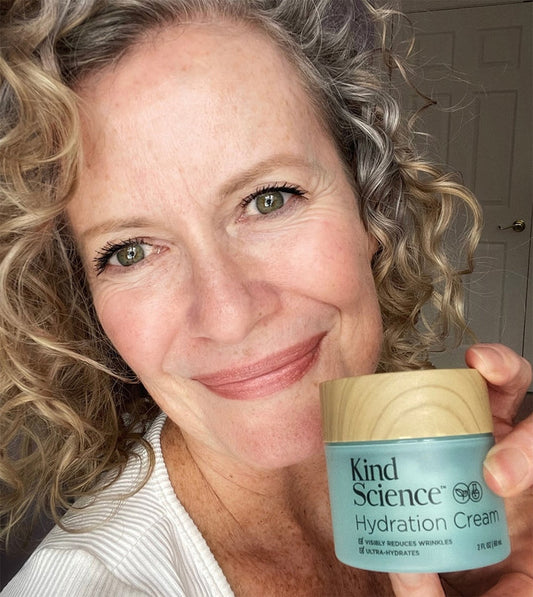
Don't stop at your jawline. The Neck Treatment Power Trio brings together Neck Treatment, Hydration Cream and Overnight Repair for a complete morning-to-night neck routine.
Just $49.95 + a FREE Jade Facial Roller.
Every order is backed by our 60-Day Money-Back Guarantee (less s+h). Shop the Neck Treatment Power Trio
Next read: How to Tighten Neck Skin: What Actually Helps
*In a clinical study on 32 participants, using Neck Treatment.